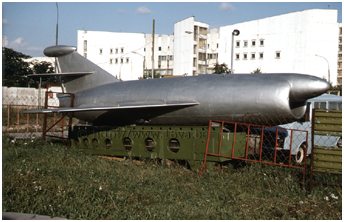
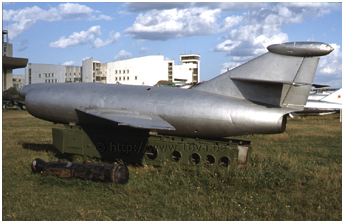
 The first Soviet surface-to-surface cruise missile entered the Soviet Air Force inventory on March 22, 1957. Designated FKR-1 (Frontovaya Krilataya Raketa, or Frontline Cruise Missile),
the "Meteor" weapon system was directly derived from the KS-1(Krilatiy Snaryad, or literally Air Projectile) air-to-surface and antiship missile , known in the West as the AS-1 "Kennel," and whose
weapon system was designated "Kometa."
The first Soviet surface-to-surface cruise missile entered the Soviet Air Force inventory on March 22, 1957. Designated FKR-1 (Frontovaya Krilataya Raketa, or Frontline Cruise Missile),
the "Meteor" weapon system was directly derived from the KS-1(Krilatiy Snaryad, or literally Air Projectile) air-to-surface and antiship missile , known in the West as the AS-1 "Kennel," and whose
weapon system was designated "Kometa."
The development of a guidance system for a missile that did not yet carry the "cruise" designation was initiated as early as 1947 by Special Bureau n°1, while Sukhoy's OKB-51 was tasked
with developing the missile itself. However, the project passed into the hands of MiG's OKB-155 in 1948.
The initial designs were based on a MiG-9 airframe. But ultimately, a machine resembling the MiG-15, but smaller and with more swept wings than the "Fagot" was chosen. To test and refine the control system, a cockpit was installed, along with a retractable landing gear and flaps
(> Link). It was the double HSU Amet-Khan Sultan (1) that performed the first flight on January 4, 1951,
while the first drop of the prototype from a Tu-4K took place in May 1951. Finally, in May 1952, the first test firing of a KS-1 was carried out after 150 manned flights, although it was a failure
(documents related to the KS-1
> Link).

The KS-1 was about to generate a line of descendants based on the same airframe. As early as 1954, development began on a coastal defense weapon launched from fixed batteries. The weapon system designated "Strela" employed the S-2 missile (originally KS-2?), which was externally similar to the KS-1, except for the smaller fairing at the top of the fin and the addition of small tail fins. Launch from a ramp was aided by a jettisonable SPRD-15 solid-fuel booster. This anti-ship system entered service in August 1957. The system designated 4K87 and named "Sopka," whose development began in 1955, used the same S-2 missile for the same missions, except that it was now launched from mobile launchers. The "Sopka" (SSC-2-B "Samlet") was officially accepted into service by the Commander-in-Chief of the Navy in December 1958. The NVA's Special Coastal Artillery Battalion (SKA-Abt.) used the "Sopka" (> Link). A Soviet coastal defense unit also reportedly deployed the "Sopka" near the Sassnitz naval base. The "Koltchan" system, also based on the S-2 missile, was tested aboard the light cruiser Admiral Nakhimov in 1955, but its development was discontinued due to various domestic political and operational considerations. The designation KSS is sometimes used for either of these missiles, depending on the publication. It would appear that this is a generic designation for the S-2 missile.
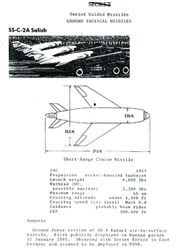
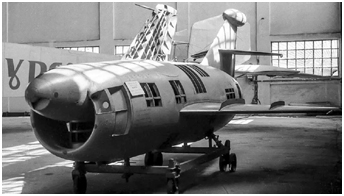 Finally, a land-based version of the KS-1, designed to strike targets up to 125 km deep (minimum 25 km), was developed under the designation KS-7 - FKR-1 "Meteor" weapon system - (SSC-2-A "Salish"). The arrival of this missile variant could be compared to the entry into service of the USAF's Martin MGM-1 Matador nuclear-capable surface-to-surface cruise missile, operational in 1953-1954 (> Link) and also deployed in West Germany with the 38th Tactical Missile Wing (> Link). However, this comparison is not entirely accurate, as the range of the weapon system associated with the Matador allowed it to reach the eastern part of East German territory. With an accuracy of approximately 500 meters (150 meters at best), the KS-7 was clearly also designed for nuclear applications. Unlike coastal defense missiles, the KS-7 was not designed to strike moving targets, and mounting a radar in its nose cone was no longer relevant. Nevertheless, the KS-7 retained the same silhouette as the KS-1 or the S-2, with a radar bulge above the engine's air intake. This bulge, more ogival in shape, was made of aluminum rather than a dielectric material, details that distinguished this version of the missile.
The warhead was identical to that of the S-2 missiles: 860 kg of explosive. An RDS-4M munition was carried during a nuclear strike. An RDS-4 bomb was first dropped by an Il-28 at Semipalatinsk on August 23, 1953, nearly a year before the KS-7 was developed, and its design took into account the characteristics of this munition (> RDS-4 bomb).
Finally, a land-based version of the KS-1, designed to strike targets up to 125 km deep (minimum 25 km), was developed under the designation KS-7 - FKR-1 "Meteor" weapon system - (SSC-2-A "Salish"). The arrival of this missile variant could be compared to the entry into service of the USAF's Martin MGM-1 Matador nuclear-capable surface-to-surface cruise missile, operational in 1953-1954 (> Link) and also deployed in West Germany with the 38th Tactical Missile Wing (> Link). However, this comparison is not entirely accurate, as the range of the weapon system associated with the Matador allowed it to reach the eastern part of East German territory. With an accuracy of approximately 500 meters (150 meters at best), the KS-7 was clearly also designed for nuclear applications. Unlike coastal defense missiles, the KS-7 was not designed to strike moving targets, and mounting a radar in its nose cone was no longer relevant. Nevertheless, the KS-7 retained the same silhouette as the KS-1 or the S-2, with a radar bulge above the engine's air intake. This bulge, more ogival in shape, was made of aluminum rather than a dielectric material, details that distinguished this version of the missile.
The warhead was identical to that of the S-2 missiles: 860 kg of explosive. An RDS-4M munition was carried during a nuclear strike. An RDS-4 bomb was first dropped by an Il-28 at Semipalatinsk on August 23, 1953, nearly a year before the KS-7 was developed, and its design took into account the characteristics of this munition (> RDS-4 bomb).
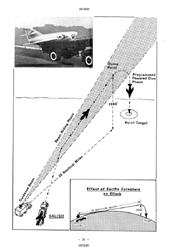 The FKR-1 system was approved by government decree on March 3, 1957, and entered service on the 22nd of the same month. Mass production had already begun at Factory n°256 in Dubna a few months earlier, while a test firing of a KS-7 equipped with a nuclear warhead was carried out on January 17, 1958, in Semipalatinsk. However, the missile was dropped from a Tu-16 instead of being launched from a ground ramp as its normal operating procedure dictated (urban combat training video showing a KS-7 firing at 13'30" >Link).
The missile's equipment included an inertial guidance system called "Meteor," an AP-M autopilot, and an NB radio control system. The receiving section of this system was mounted on top of the vertical stabilizer, housed in a large fairing similar to that of the KS-1.
The missiles were transported on a Kh-10 mobile launch ramp towed by a YaAZ-214 (later renamed KrAZ-214) truck.
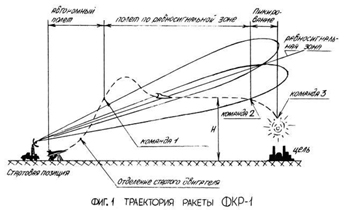
The KS-7 was powered by a 1,500 kgp RD-500K turbojet engine like its counterparts. It took off at a 10° angle, assisted by an SPRD-15M or PRD-125 booster rocket, which brought the total mass to 3.9 tons at takeoff. The missile took off in less than two seconds at 1100 km/h, then climbed to a predetermined altitude, between 600 and 1200 meters while following a predetermined heading at a cruising speed of 900 km/h. After a few seconds, the onboard radio control system (NB) was activated, allowing the ground control station (NN) to direct the flight using signals emitted by an antenna mounted 20 meters high. This antenna measured the distance between the missile and the launch site to determine its proximity to the target. The flight altitude was maintained using a statoscope (a differential barometer measuring altitude variations relative to a reference isobaric surface). Once close to the target, a command was issued by the control station, plunging the KS-7 towards the ground. During the final dive, the onboard systems and the autopilot took over, and the nuclear explosion occurred after impact with the ground or at altitude. In this regard, the detonation altitude was manually programmed before launch. The signal triggering the detonation, via an automatic control unit, was generated using pressure sensors.
The FKR-1 system was approved by government decree on March 3, 1957, and entered service on the 22nd of the same month. Mass production had already begun at Factory n°256 in Dubna a few months earlier, while a test firing of a KS-7 equipped with a nuclear warhead was carried out on January 17, 1958, in Semipalatinsk. However, the missile was dropped from a Tu-16 instead of being launched from a ground ramp as its normal operating procedure dictated (urban combat training video showing a KS-7 firing at 13'30" >Link).
The missile's equipment included an inertial guidance system called "Meteor," an AP-M autopilot, and an NB radio control system. The receiving section of this system was mounted on top of the vertical stabilizer, housed in a large fairing similar to that of the KS-1.
The missiles were transported on a Kh-10 mobile launch ramp towed by a YaAZ-214 (later renamed KrAZ-214) truck.
The KS-7 was powered by a 1,500 kgp RD-500K turbojet engine like its counterparts. It took off at a 10° angle, assisted by an SPRD-15M or PRD-125 booster rocket, which brought the total mass to 3.9 tons at takeoff. The missile took off in less than two seconds at 1100 km/h, then climbed to a predetermined altitude, between 600 and 1200 meters while following a predetermined heading at a cruising speed of 900 km/h. After a few seconds, the onboard radio control system (NB) was activated, allowing the ground control station (NN) to direct the flight using signals emitted by an antenna mounted 20 meters high. This antenna measured the distance between the missile and the launch site to determine its proximity to the target. The flight altitude was maintained using a statoscope (a differential barometer measuring altitude variations relative to a reference isobaric surface). Once close to the target, a command was issued by the control station, plunging the KS-7 towards the ground. During the final dive, the onboard systems and the autopilot took over, and the nuclear explosion occurred after impact with the ground or at altitude. In this regard, the detonation altitude was manually programmed before launch. The signal triggering the detonation, via an automatic control unit, was generated using pressure sensors.
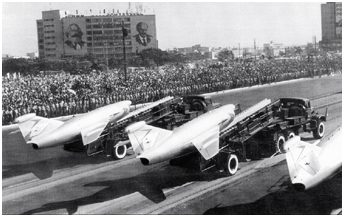
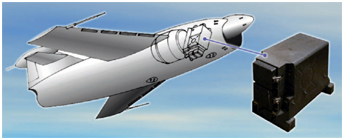 In the autumn of 1959, the VVS had seven (2) Independent Aviation Engineering Regiments (Otdel'niy Aviatsionniy Inzhenerniy Polk - OAIP) equipped with the "Meteor" system. Each regiment, formed from the conversion of existing VVS regiments, was reportedly composed of four battalions, each equipped with two Kh-10 TELs and their missiles, for a total of eight launchers. Each regiment also included a specialized unit, the Independent Mobile Missile-Technical Base (Otdel'naya Podvijnaya Raketno-Tekhnitcheskaya Baza - OPRTB), responsible for the transport, maintenance, storage, and assembly of the special munitions before they were mounted in the missiles. In 1962, the organization and designation of the units changed to better reflect their aeronautical nature. Each regiment now comprised two launch squadrons (startoviy eskadril'ya), each consisting of two launch detachments (startoviy otryad) equipped with two Kh-10 TELs - for a total of 8 launch ramps - and their KS-7 missiles and a technical squadron. A regiment's arsenal consisted of 20 missiles. A unit's equipment included a control station, a guidance antenna, a generator, and a vehicle with a set of cables. The launch squadrons included a detachment essential for preparing firing sequences.
The latter was equipped with a topographic vehicle (based on a GAZ-69), a GAZ-63 with a trailer for transporting soldiers and equipment, two gyrotheodolites, standard theodolites with rangefinders, measuring tapes, diagrams, and slide rules for calculating missile launch data.
The geodetic preparation of the launch site consisted of determining the coordinates of a reference point on which the antenna would be centered, as well as the direction angle between this point and a mast erected 50-100 meters in the direction of the target. The required accuracy was 10 meters for the coordinates and one arcminute for the target direction.
In the autumn of 1959, the VVS had seven (2) Independent Aviation Engineering Regiments (Otdel'niy Aviatsionniy Inzhenerniy Polk - OAIP) equipped with the "Meteor" system. Each regiment, formed from the conversion of existing VVS regiments, was reportedly composed of four battalions, each equipped with two Kh-10 TELs and their missiles, for a total of eight launchers. Each regiment also included a specialized unit, the Independent Mobile Missile-Technical Base (Otdel'naya Podvijnaya Raketno-Tekhnitcheskaya Baza - OPRTB), responsible for the transport, maintenance, storage, and assembly of the special munitions before they were mounted in the missiles. In 1962, the organization and designation of the units changed to better reflect their aeronautical nature. Each regiment now comprised two launch squadrons (startoviy eskadril'ya), each consisting of two launch detachments (startoviy otryad) equipped with two Kh-10 TELs - for a total of 8 launch ramps - and their KS-7 missiles and a technical squadron. A regiment's arsenal consisted of 20 missiles. A unit's equipment included a control station, a guidance antenna, a generator, and a vehicle with a set of cables. The launch squadrons included a detachment essential for preparing firing sequences.
The latter was equipped with a topographic vehicle (based on a GAZ-69), a GAZ-63 with a trailer for transporting soldiers and equipment, two gyrotheodolites, standard theodolites with rangefinders, measuring tapes, diagrams, and slide rules for calculating missile launch data.
The geodetic preparation of the launch site consisted of determining the coordinates of a reference point on which the antenna would be centered, as well as the direction angle between this point and a mast erected 50-100 meters in the direction of the target. The required accuracy was 10 meters for the coordinates and one arcminute for the target direction.
Two regiments, the 584. and 561.OAIP, arrived in Cuba in late August 1962 as part of Operation Anadyr (3). They were renumbered the 231. and 222.OAIP respectively a month later. Eighty nuclear warheads were reportedly delivered in Cuba, as there were plans to send more missiles there. However, they did not arrive before the start of the American blockade of the island on October 22, 1962.
The 584/231.OAIP targeted the Key West Naval Air Station in Florida and the Cuban coast in the event of an American or Contra landing, while the 561/222.OAIP targeted the US base at Guantanamo Bay, located on the island itself. As the Cuban Missile Crisis drew to a close following the withdrawal of ballistic missiles, the PRTB units of the FKR-1 regiments also withdrew, along with their nuclear heads, on December 1, 1962. The OAIP regiments remained on the island for two more years to train Cubans who would take over from the FKR-1s - nicknamed "Fidel Castro Ruz" - armed with conventional warheads. Cuba also used "Sopka" missiles.
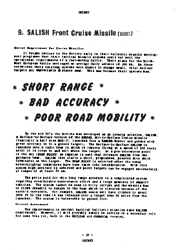 Two FKR-1 units, spread across four sites in peacetime, were deployed to East Germany from late 1960 onwards as part of the 24.VA.
Unfortunately, the information about these regiments is incomplete, and its accuracy remains a subject of debate.
Indeed, there are sometimes references to four regiments. This article aims only to provide an overview of a weapon system that was deployed in East Germany.
Part of the 443.OAIP - likely a launch squadron from 1962 onward - was stationed at Ludwigslust-Techentin airfield in the north, just over 40 km from the inner German border,
while the regiment's second squadron was presumably stationed at Quedlinburg-Quarmbeck airfield further south, about 30 km from the border.
An unknown PRTB-type unit was associated with the regiment.
Information concerning certain FKR units was collected from the Central Archives of the Russian Ministry of Defense (TsAMO) and published on a now-defunct Russian forum.
The full designation of this type of regiment is sometimes interpreted in two ways in the archives: the abbreviation Krilatikh Raket or Frontovnikh Krilatikh Raket is added after OAIP.
The 443.OAIP was formed on December 25, 1958, from the 974.IAP based in Mirgorod, which was equipped with MiG-17s during its conversion. It was stationed at Ludwigslust-Techentin before being
deactivated on October 5, 1967, then reformed as the 443.IBAP on November 1, 1967. This latter unit was transformed into the 443.UAP in 1969 and finally into the 449.UAP of the Kharkiv Higher Military Aviation School.
Two FKR-1 units, spread across four sites in peacetime, were deployed to East Germany from late 1960 onwards as part of the 24.VA.
Unfortunately, the information about these regiments is incomplete, and its accuracy remains a subject of debate.
Indeed, there are sometimes references to four regiments. This article aims only to provide an overview of a weapon system that was deployed in East Germany.
Part of the 443.OAIP - likely a launch squadron from 1962 onward - was stationed at Ludwigslust-Techentin airfield in the north, just over 40 km from the inner German border,
while the regiment's second squadron was presumably stationed at Quedlinburg-Quarmbeck airfield further south, about 30 km from the border.
An unknown PRTB-type unit was associated with the regiment.
Information concerning certain FKR units was collected from the Central Archives of the Russian Ministry of Defense (TsAMO) and published on a now-defunct Russian forum.
The full designation of this type of regiment is sometimes interpreted in two ways in the archives: the abbreviation Krilatikh Raket or Frontovnikh Krilatikh Raket is added after OAIP.
The 443.OAIP was formed on December 25, 1958, from the 974.IAP based in Mirgorod, which was equipped with MiG-17s during its conversion. It was stationed at Ludwigslust-Techentin before being
deactivated on October 5, 1967, then reformed as the 443.IBAP on November 1, 1967. This latter unit was transformed into the 443.UAP in 1969 and finally into the 449.UAP of the Kharkiv Higher Military Aviation School.
The second regiment was reportedly the 439.OAIP, which originated from the 439.IAP, and which was still flying MiG-17s around 1958 at Zyabrovka.
It was based at the Arnstadt-Röhrensee barracks in the south, about sixty kilometers from the western and southern borders, and at
Katl-Marx-Stadt-Ebersdorf barracks in the southeast, north of the Czechoslovak border and about 100 kilometers from the West German border.
An unknown PRTB-type unit was also associated with the regiment.
A testimony concerning a 584.OAIP site located in Pervomaysk, Ukraine, gives us an idea of the possible organization of FKR-1 sites in East Germany.
"The regiment's site was surrounded by three guarded barbed-wire fences. The headquarters, logistics, support units, living quarters, mess hall, parade ground, sports fields, etc., were located behind the first perimeter. The hangars and other buildings housing the launch squadron's equipment, as well as the technical units and the missiles themselves, were located behind the second perimeter. Finally, the PRTB unit was located behind the third perimeter."
The extent to which the theoretical mobility of the FKR-type units would have been exploited in wartime remains a matter of speculation. If we consider that they would have operated from their home bases, and given the short range of the KS-7 missiles, the regiments based in East Germany were primarily intended for defensive missions, as they could hardly strike beyond the West German border.
Some East German citizens claimed to have heard mysterious jet engine noises near these facilities, even though no aircraft were visible.These were likely maintenance tests or even technical training exercises. The engine powering the KS-7 was a downgraded version of the Klimov RD-500, designed to power the La-15 and Yak-23. Thus, the RD-500K's limited capabilities (Korotkoresoursniy - limited resources) allowed only thirty minutes at full power and ten hours of testing.
FKR units have generally met with diverse fates at the end of their operational life. Several of them, including some from the GSVG, were converted into DBR-1 long-range reconnaissance drone units.
The obsolete KS-7s were used as low-flying targets for fighters at the Ashuluk firing range. As for the PRTB units, they remained in the GDR after the withdrawal of the FKR regiments they supported, in order to form the RTB (Remontno-Tekhnitcheskaya Baza - repair and technical base) units for the storage of nuclear bombs.
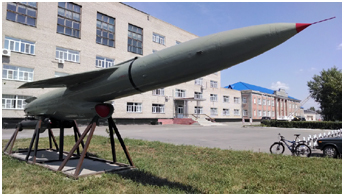
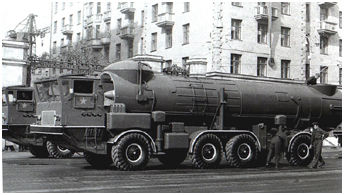 The FKR-1 system was unreliable, and launch preparation time consistently exceeded 30 minutes, sometimes considerably. The system was withdrawn from service in the late 1960s.
Its successor, the S-5, integrated into the 2K17 weapon system, also known as the FKR-2 (SS-C-1A "Shaddock"), was significantly more effective.
The S-5 was derived from the P-5 naval cruise missile (SS-N-3A "Shaddock" > Link 1 / > Link 2), the development of which began in 1954 at OKB-52 design bureau. Launched from submarines and warships, it was officially approved by decree of the USSR Council of Ministers in June 1959 for submarines and in 1962 for warships. This missile had its wings folded downwards when housed in its launch container. The wings deployed automatically at launch thanks to a hydraulic system designated ARK-5. The launcher was pointed skyward at a 15° angle, while the P-5, powered by a degraded KRD-26 turbojet producing 2,250 kgp of thrust, took off from its launch ramp assisted by two jettisonable SPRD-34 boosters providing a total thrust of 36.6 tonnes. Weighing 5,400 kg at launch, it could reach a target 500 km away - but not closer than 80 km - with a CEP of 3 to 4 km. The conventional or nuclear warhead (always the RDS-4) weighed between 800 and 1,000 kg.
More than ten versions of the P-5 were tested between 1958 and 1959, including the P-5D, which featured a more precise radio navigation system. The S-5 was developed from this latter version, equipped with an inertial guidance system including an AP-70A autopilot with a gyroscopic heading indicator, a barometric altimeter, and a chronometer.
The S-5 (4K95) missile was to be transported and launched from a 2P30 TEL mounted on a ZiL-135K chassis. The vehicle was horizontally stabilized by hydraulic jacks before launch. The tube containing the missile, with its wings folded, was also tilted to 15° before firing. All the equipment necessary for launch preparation was installed in the truck's cab, while remote firing was triggered by a control box connected by a 50-meter cable. The theoretical preparation time for a launch was 35 minutes under the best conditions, from a predefined position.
The FKR-1 system was unreliable, and launch preparation time consistently exceeded 30 minutes, sometimes considerably. The system was withdrawn from service in the late 1960s.
Its successor, the S-5, integrated into the 2K17 weapon system, also known as the FKR-2 (SS-C-1A "Shaddock"), was significantly more effective.
The S-5 was derived from the P-5 naval cruise missile (SS-N-3A "Shaddock" > Link 1 / > Link 2), the development of which began in 1954 at OKB-52 design bureau. Launched from submarines and warships, it was officially approved by decree of the USSR Council of Ministers in June 1959 for submarines and in 1962 for warships. This missile had its wings folded downwards when housed in its launch container. The wings deployed automatically at launch thanks to a hydraulic system designated ARK-5. The launcher was pointed skyward at a 15° angle, while the P-5, powered by a degraded KRD-26 turbojet producing 2,250 kgp of thrust, took off from its launch ramp assisted by two jettisonable SPRD-34 boosters providing a total thrust of 36.6 tonnes. Weighing 5,400 kg at launch, it could reach a target 500 km away - but not closer than 80 km - with a CEP of 3 to 4 km. The conventional or nuclear warhead (always the RDS-4) weighed between 800 and 1,000 kg.
More than ten versions of the P-5 were tested between 1958 and 1959, including the P-5D, which featured a more precise radio navigation system. The S-5 was developed from this latter version, equipped with an inertial guidance system including an AP-70A autopilot with a gyroscopic heading indicator, a barometric altimeter, and a chronometer.
The S-5 (4K95) missile was to be transported and launched from a 2P30 TEL mounted on a ZiL-135K chassis. The vehicle was horizontally stabilized by hydraulic jacks before launch. The tube containing the missile, with its wings folded, was also tilted to 15° before firing. All the equipment necessary for launch preparation was installed in the truck's cab, while remote firing was triggered by a control box connected by a 50-meter cable. The theoretical preparation time for a launch was 35 minutes under the best conditions, from a predefined position.
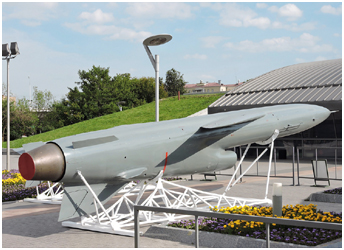
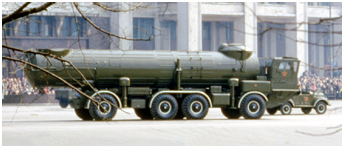 The 2K17 complex included the following vehicles:
- the TEL 2P30
- a 9T11 missile resupply vehicle
- a 2T12 maintenance vehicle
- a 9V47 test vehicle
- a 9V66 generator vehicle
- a 2G1U fuel truck
- a 9T418 vehicle for transporting spare parts
- two crane vehicles 9T31 and K-14
- an 8T311 water cleaning vehicle
Two 2P30 TEL were displayed in Red Square during the May Day parade in 1959. The first test firing took place on July 21, 1960, at Kapustin Yar, followed by a second later that month in the presence of Nikita Khrushchev and Defense Minister R. Ya. Malinovsky.
Initial testing concluded in October 1961 after five firings, and the FKR-2 system officially entered service on December 30, 1961. A project to increase the system's mobility was not completed. This involved a smaller TEL, designated 9P116, designed to be transported by a Mi-10RVK helicopter.
Other versions of the S-5 missile were also developed, such as the S-5T with a chemical warhead and the S-5M, capable of avoiding obstacles. It is sometimes claimed that the FKR-2 system was deployed in East Germany in the mid-1960s to replace the FKR-1 system. However, this remains to be proven.
The S-5 was withdrawn from service around 1975.
notes
(1)
He finished the war with the 9.GvIAP, whose squadrons were spread between Schönefeld and Tempelhof in May 1945. Becoming a test pilot in 1949,
he was killed in a Tu-16LL crash on February 1, 1971. He is buried in the Novedevichi cemetery in Moscow.
> Link 1
> Link 2.
(2)
It was planned to add eleven more, and there is evidence of at least ten units.
(3)
The Cuban Missile Crisis (October 14-27, 1962) is primarily known for the deployment of R-12 "Dvina" (SS-4 Sandal) (> Link) and R-14 "Chusovaya"
(SS-5 Skean) (> Link) medium-range ballistic missiles capable of reaching US territory.
 |
Plan du site - Sitemap |  |

